
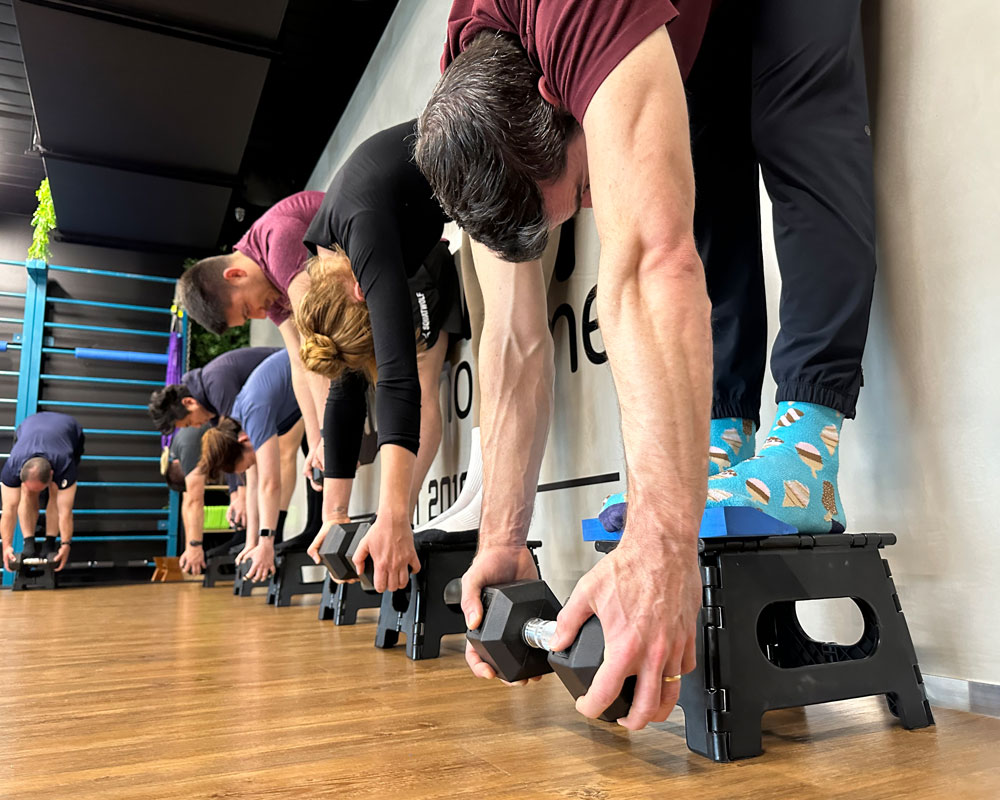
Turkish Get-Up
Master this complex movement pattern that builds total-body strength and coordination. A complete exercise in one movement.
The Turkish get-up involves moving from lying to standing while maintaining a weight overhead, creating a complex sequence that challenges stability, mobility, and coordination throughout the body. This traditional exercise builds functional strength through multiple positions and transitions, making it one of the most comprehensive single exercises available. Each phase of the movement addresses different aspects of fitness.
Beyond Movement teaches the Turkish get-up as a skill requiring patient progression through each position. Starting with no weight and breaking down each transition, students build the mobility and stability required before adding load. We emphasize quality over speed, as rushing through positions defeats the exercise's purpose of building controlled strength through challenging positions.
Regular Turkish get-up practice creates resilient, capable bodies prepared for any physical challenge. The exercise develops shoulder stability unmatched by isolated exercises while building core strength through constantly changing positions. The mobility requirements address common restrictions, while the complexity builds neural pathways for improved movement quality. Athletes and rehabilitation populations alike benefit from this comprehensive exercise.
Prerequisites
- Basic shoulder stability
- Hip mobility for lunge position
- Core control
- Understanding of complex sequences
- Patience for learning
Common mistakes
-
Rushing transitions
Move deliberately through each position
-
Poor shoulder position
Pack shoulder throughout the movement
-
Skipping steps
Include all positions in the sequence
-
Looking at weight
Eyes follow the weight during initial phases, then forward
-
Starting too heavy
Master bodyweight first before adding load
Learn This Skill In These Classes
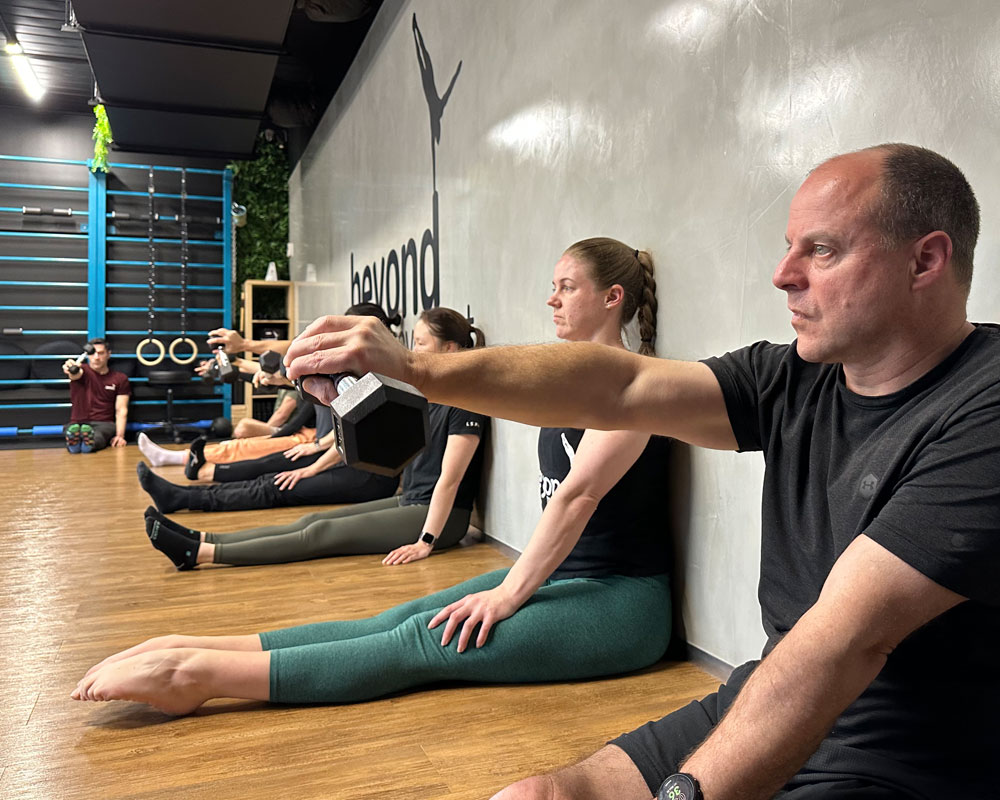
Common questions about Turkish Get-Up
How long does it take to learn Turkish Get-Up?
Most people need 4-6 weeks of consistent, coached practice. That assumes you can already meet the prerequisites below — starting without them is the single biggest reason progress stalls.
What do you need before starting Turkish Get-Up?
Build these first: Basic shoulder stability,Hip mobility for lunge position,Core control,Understanding of complex sequences,Patience for learning. Each one removes a specific limitation, so working on them is not a detour — it is the fastest route to the skill.
What are the most common Turkish Get-Up mistakes?
- Rushing transitions — Move deliberately through each position
- Poor shoulder position — Pack shoulder throughout the movement
- Skipping steps — Include all positions in the sequence
- Looking at weight — Eyes follow the weight during initial phases, then forward
- Starting too heavy — Master bodyweight first before adding load