
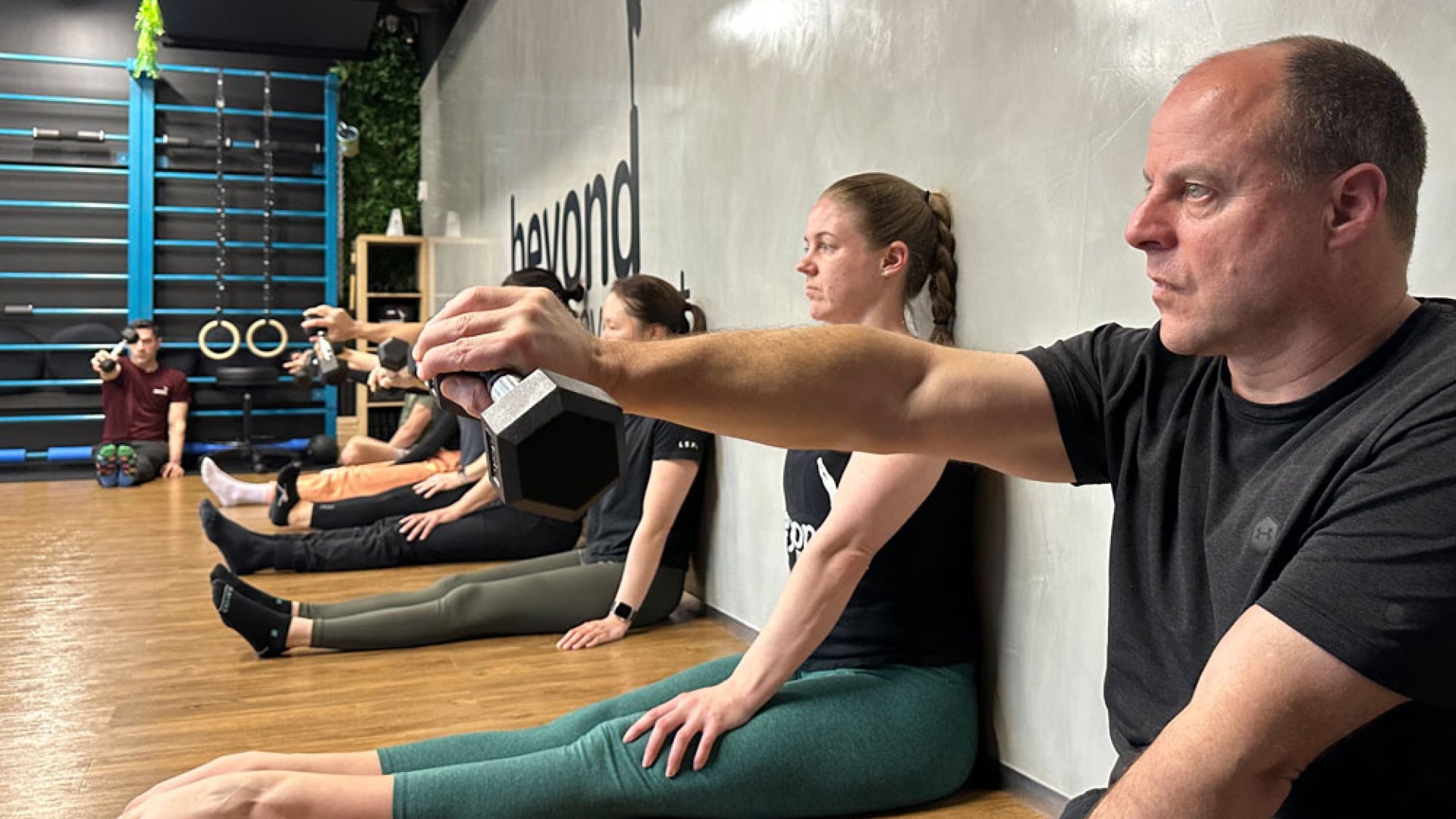
Shoulders, Neck, Thoracic Spine and Wrists
The shoulder rarely works alone. Overhead range depends on the thoracic spine behind it, the scapula it sits on, the neck above it and the wrists at the far end of the chain. This class works the whole upper body, which is why a stiff mid-back often turns out to be the reason a shoulder will not go overhead.
Alongside the mobility work, every session builds strength through the range you are opening and the core control that stops the lower back doing the shoulder a favour. Small groups of twelve to fourteen, so positions get looked at properly.
What to Expect
Mobility, stability and conditioning across the whole upper body
Injury Prevention
Address the shoulder and neck restrictions that cause trouble later, before they become the reason you stop training.
Mobility & Stability
Range on its own is fragile. Pair it with targeted strengthening and the shoulder becomes mobile and resilient rather than just loose.
Thoracic and Neck
Mid-back extension and rotation, plus neck positioning, which is where most overhead restriction and desk-related ache actually originates.
Wrists and Grip
Wrist conditioning and grip work, the end of the chain that gets skipped until it is the thing holding everything else back.
Core That Connects
Hollow holds and plank variations, so the ribs and pelvis stay where they should instead of the lower back paying for overhead work.
Performance Ready
Prepare your shoulders for handstands, rings and overhead work, or simply for lifting something above your head without thinking about it.
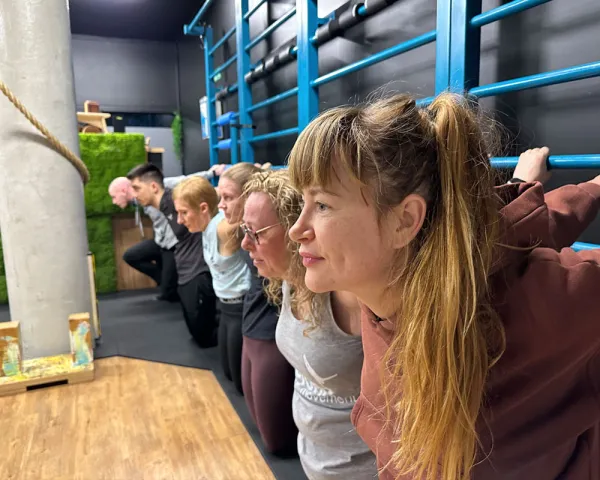
Perfect for Desk Workers
Rounded shoulders, a tight chest, a neck that aches by mid-afternoon and a mid-back that has forgotten how to extend. Eight hours at a keyboard is a position, and the body adapts to it.
Thoracic mobilisation, postural strengthening and neck work undo that pattern, and the strength side is what makes the change hold once you sit back down.
What You Will Work On
Overhead range. Shoulder extension and flexion work, thoracic mobility behind it, and scapular control so the range comes from the right places.
Shoulder conditioning. Strengthening through the range you are opening, including the end-range positions where shoulders are usually weakest.
Wrists and grip. Wrist conditioning and grip strength, which matter the moment you start putting weight through your hands.
Core and trunk. Hollow body holds, side and reverse planks, and the rib-to-pelvis control that keeps the lower back out of your overhead work.
Everything scales. Beginners and people already working on handstands train the same movements at different points on the progression.
Where Classes End and Personal Training Begins
Focused rehabilitation work belongs in personal training. It needs assessment, a program built for one body, and progression reviewed against how that body is actually responding week to week.
These classes are excellent support for that work, but they are general by design, a group of twelve working the same area rather than twelve individual programs. If you are training around a shoulder or neck injury, start one-to-one and use the class alongside it.
Shoulder Recovery Success Stories
From chronic pain to pain-free movement
Skills You'll Learn
Shoulder Extension
Develop the shoulder flexibility crucial for bridges and advanced movements. Often restricted but essential for balanced development.
Shoulder Conditioning
Build bulletproof shoulders with targeted strengthening exercises. Essential for injury prevention and advanced skill development.
Scapular Awareness
Develop conscious control of your shoulder blades. Essential for safe and effective upper body training.
Thoracic Mobility
Unlock your upper back for better posture and movement. Essential for overhead work and spinal health.
Bridge (Wheel)
Open your shoulders and spine with this fundamental backbend. Essential for spinal health and countering forward-rounded postures.
Wrist Conditioning
Prepare your wrists for the demands of handstand and floor work. Build strength and mobility for sustainable practice.
Grip Strength
Build powerful grip strength for hanging, pulling, and daily activities. The often-limiting factor in upper body training.
Core Stability
Build a strong, stable core that protects your spine and enhances all movement. The foundation of athletic performance.
Hollow Body Hold
The fundamental core position for all gymnastics movements. Master this to unlock handstands, levers, and advanced skills.
Side Plank
Develop lateral core strength and stability. Essential for preventing injury and building balanced core development.
Reverse Plank
Strengthen your posterior chain with this inverted plank position. Builds shoulder extension and glute strength.
Toes-to-Bar
Develop explosive core strength and compression with this dynamic exercise. Essential for gymnasts and CrossFit athletes.
Overhead Squat
Challenge mobility and stability with weight overhead. This complex movement reveals and develops full-body coordination.
Turkish Get-Up
Master this complex movement pattern that builds total-body strength and coordination. A complete exercise in one movement.
Freestanding Handstand
Master the art of balancing on your hands without wall support. This foundational inversion builds incredible shoulder strength, core stability, and full-body awareness.