
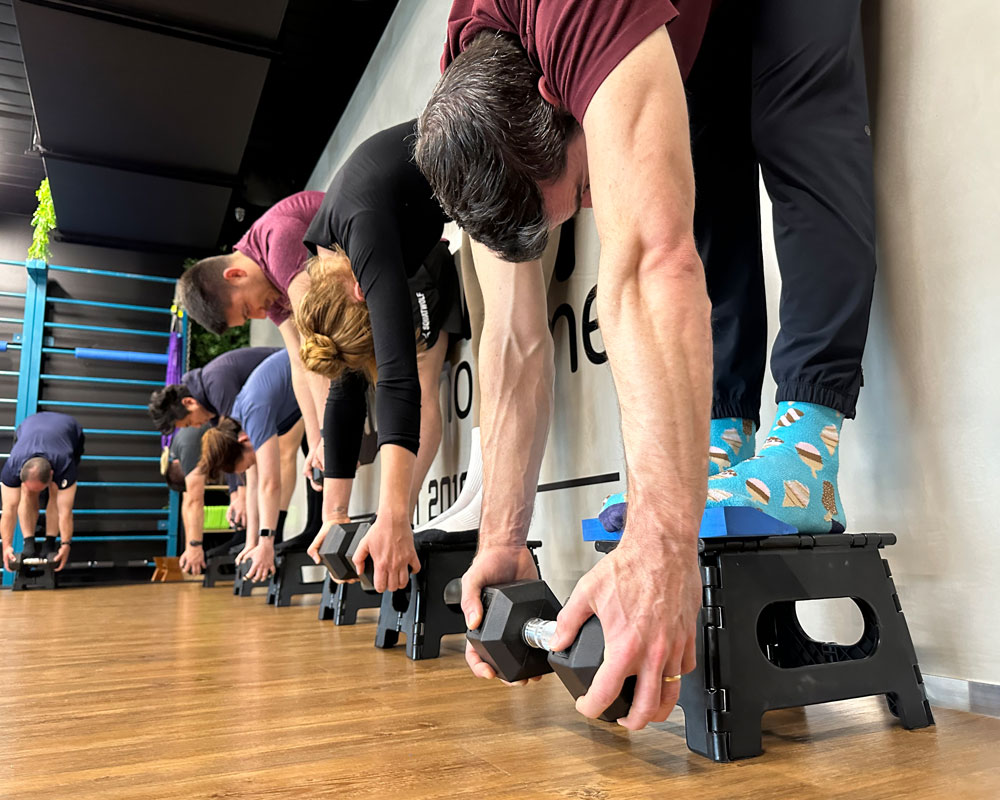
Front Support
The foundational hold that underpins pushing, handstands, and full-body tension. Master this before everything else.
The front support — often called a plank hold with locked arms — is the single most important position in calisthenics. Unlike the forearm plank, the front support demands straight arms, packed shoulders, and active engagement through the entire body. It teaches the protraction, hollow body alignment, and full-body tension that carry directly into push-ups, handstands, and every gymnastics skill.
At Beyond Movement, we treat the front support as the first skill every student must own. We look for active shoulder protraction, a neutral spine with slight posterior pelvic tilt, squeezed glutes, and locked knees. When these details are solid, everything built on top — from push-up variations to planche progressions — has a reliable foundation.
Regular front support practice builds the scapular stability and body awareness needed for more advanced work. Holding the position for time develops endurance in the stabilisers, while variations like rocking front supports and single-leg holds introduce the perturbations that prepare the body for dynamic movement.
Prerequisites
- Ability to hold bodyweight on hands
- Basic body awareness
Common mistakes
-
Sagging hips
Squeeze glutes and tilt pelvis slightly posterior
-
Shoulders shrugged to ears
Actively push the floor away and protract the shoulder blades
-
Elbows bent or soft
Lock the arms fully to build straight-arm strength
-
Head dropping or looking forward
Keep the neck neutral, gaze between the hands
-
Holding breath
Breathe steadily while maintaining tension
Related Skills
Variation
Plank
Master the fundamental core stability position. This essential exercise builds the foundation for all movement training.
Progression
Hollow Body Hold
The fundamental core position for all gymnastics movements. Master this to unlock handstands, levers, and advanced skills.
Progression
Push-Ups
Master the fundamental pushing pattern. This versatile exercise builds the foundation for handstands, planche, and pressing strength.
Progression
Planche Lean
Build the foundation for planche training with this essential progression. Develop straight-arm strength and the forward lean crucial for advanced skills.
Common questions about Front Support
How long does it take to learn Front Support?
Most people need 1-2 weeks of consistent, coached practice. That assumes you can already meet the prerequisites below — starting without them is the single biggest reason progress stalls.
What do you need before starting Front Support?
Build these first: Ability to hold bodyweight on hands,Basic body awareness. Each one removes a specific limitation, so working on them is not a detour — it is the fastest route to the skill.
What are the most common Front Support mistakes?
- Sagging hips — Squeeze glutes and tilt pelvis slightly posterior
- Shoulders shrugged to ears — Actively push the floor away and protract the shoulder blades
- Elbows bent or soft — Lock the arms fully to build straight-arm strength
- Head dropping or looking forward — Keep the neck neutral, gaze between the hands
- Holding breath — Breathe steadily while maintaining tension