
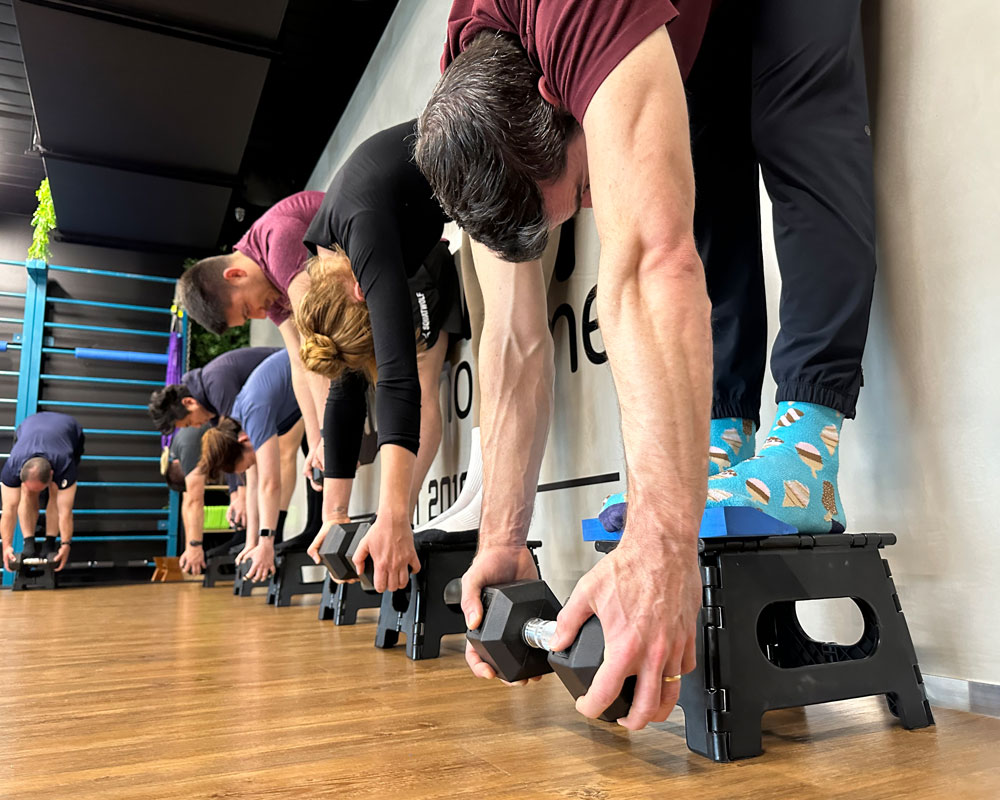
Plank
Master the fundamental core stability position. This essential exercise builds the foundation for all movement training.
The plank serves as the cornerstone of core stability training, teaching full-body tension while maintaining a straight line from head to heels. This isometric exercise develops the anterior core strength essential for everything from push-ups to handstands while teaching the body awareness fundamental to all movement practice. Despite its simplicity, perfect plank execution challenges practitioners at all levels.
Beyond Movement emphasizes quality over duration in plank training, focusing on perfect positioning and full-body engagement rather than extended holds with poor form. The exercise serves as both a strength builder and a teaching tool for concepts like posterior pelvic tilt, shoulder positioning, and breathing under tension. These lessons transfer to every other exercise in our programs.
Plank training develops more than just abdominal strength—it creates the integrated stability required for functional movement. The isometric nature builds endurance in postural muscles, directly addressing the weaknesses created by modern sedentary lifestyles. Regular plank practice improves posture, reduces back pain, and creates the foundation for athletic performance.
Prerequisites
- None (true beginner exercise)
- Basic body awareness
- Ability to support bodyweight
Common mistakes
-
Sagging hips
Maintain straight line
-
High hips
Avoid pike position
-
Forward head
Keep neutral spine
-
Holding breath
Breathe steadily
-
Focusing only on duration
Prioritise form
Related Skills
Foundation
Core Stability
Build a strong, stable core that protects your spine and enhances all movement. The foundation of athletic performance.
Progression
Push-Ups
Master the fundamental pushing pattern. This versatile exercise builds the foundation for handstands, planche, and pressing strength.
Progression
Hollow Body Hold
The fundamental core position for all gymnastics movements. Master this to unlock handstands, levers, and advanced skills.
Progression
Side Plank
Develop lateral core strength and stability. Essential for preventing injury and building balanced core development.
Progression
Bear Crawl
Rediscover primal movement patterns with this full-body exercise. Builds coordination, strength, and endurance simultaneously.
Progression
Plank Variations
Coming Soon
Common questions about Plank
How long does it take to learn Plank?
Most people need 2-4 weeks of consistent, coached practice. That assumes you can already meet the prerequisites below — starting without them is the single biggest reason progress stalls.
What do you need before starting Plank?
Build these first: None (true beginner exercise),Basic body awareness,Ability to support bodyweight. Each one removes a specific limitation, so working on them is not a detour — it is the fastest route to the skill.
What are the most common Plank mistakes?
- Sagging hips — Maintain straight line
- High hips — Avoid pike position
- Forward head — Keep neutral spine
- Holding breath — Breathe steadily
- Focusing only on duration — Prioritise form