
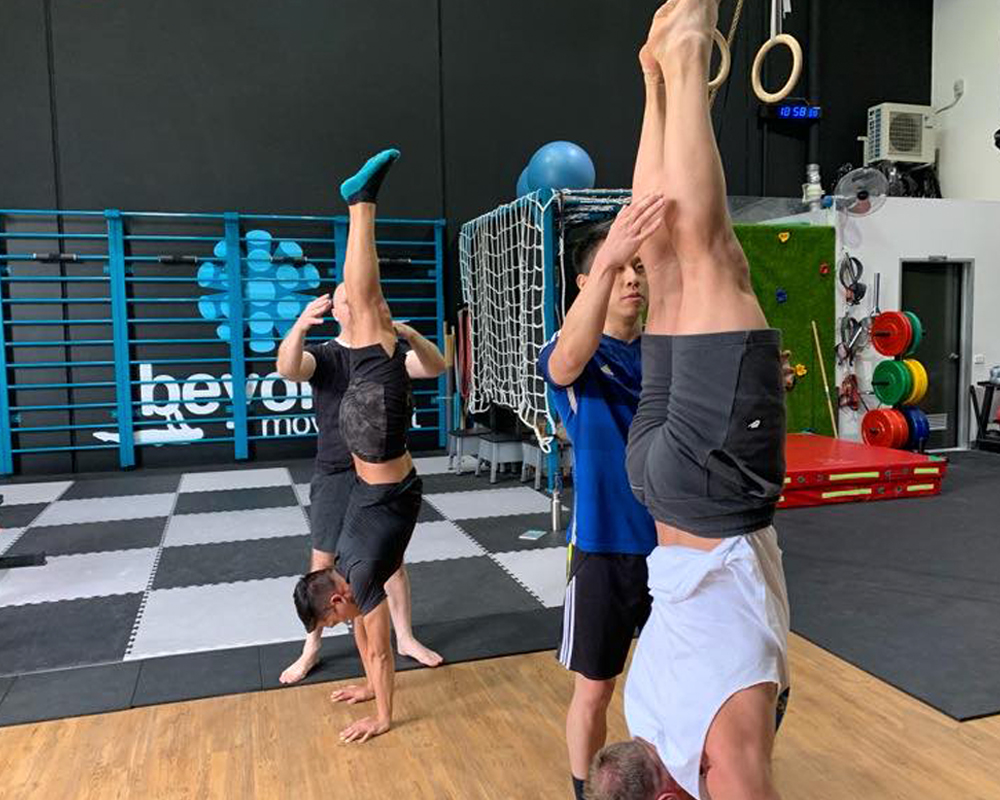
Handstand Shapes
Express creativity through different leg positions in your handstand. Develops control and adds variety to practice.
Handstand shapes involve creating different leg positions while maintaining balance—tuck, straddle, diamond, split, and countless variations. These shapes add artistic expression to handstand practice while developing enhanced control and body awareness. Beyond aesthetics, shape work challenges balance in new ways and builds strength through varied positions.
At Beyond Movement, we introduce shape work once students demonstrate consistent freestanding handstands. The practice begins with simple positions like tuck and straddle before progressing to more complex shapes and transitions. Each shape presents unique balance challenges, forcing refined control and deeper understanding of weight distribution. This variety keeps practice engaging while accelerating skill development.
Shape training enhances all aspects of handstand practice. The constant adjustments required for different positions develop exceptional shoulder stability and fine motor control. The strength built through extended holds in challenging shapes transfers to improved endurance in straight handstands. For performers and movement artists, shapes provide vocabulary for creative expression and flow work.
Prerequisites
- 45+ second straight handstand
- Good body awareness
- Flexibility for desired shapes
- Consistent balance control
- Creative mindset
Common mistakes
-
Rushing into shapes
Maintain balance first
-
Poor alignment
Keep shoulders stacked
-
Holding breath
Breathe through positions
-
Forcing flexibility
Work within range
-
Neglecting basics
Maintain straight line practice
Learn This Skill In These Classes
Related Skills
Foundation
Freestanding Handstand
Master the art of balancing on your hands without wall support. This foundational inversion builds incredible shoulder strength, core stability, and full-body awareness.
Foundation
Hip Flexibility
Coming Soon
Foundation
Balance Control
Coming Soon
Progression
Shape Transitions
Coming Soon
Progression
Handstand Flows
Coming Soon
Progression
One Arm Shapes
Coming Soon
Common questions about Handstand Shapes
How long does it take to learn Handstand Shapes?
Most people need 2-4 months (after solid handstand) of consistent, coached practice. That assumes you can already meet the prerequisites below — starting without them is the single biggest reason progress stalls.
What do you need before starting Handstand Shapes?
Build these first: 45+ second straight handstand,Good body awareness,Flexibility for desired shapes,Consistent balance control,Creative mindset. Each one removes a specific limitation, so working on them is not a detour — it is the fastest route to the skill.
What are the most common Handstand Shapes mistakes?
- Rushing into shapes — Maintain balance first
- Poor alignment — Keep shoulders stacked
- Holding breath — Breathe through positions
- Forcing flexibility — Work within range
- Neglecting basics — Maintain straight line practice