
Middle Splits
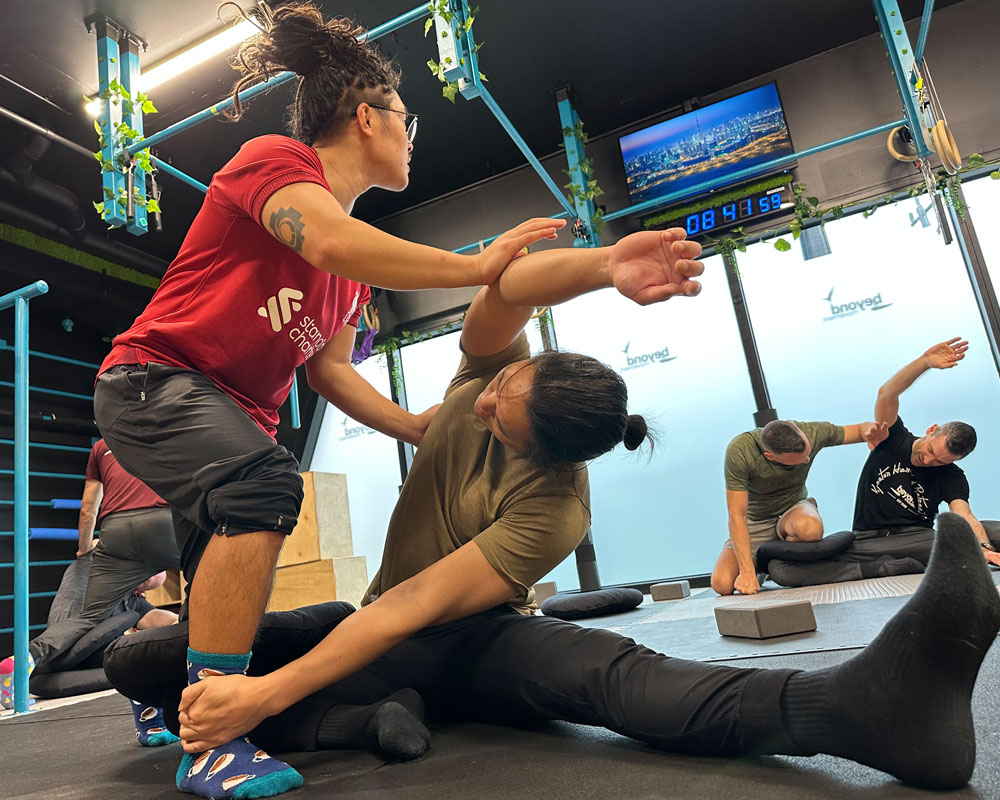
Achieve maximum hip flexibility with full straddle splits. This challenging flexibility goal enhances athletic performance and movement quality.
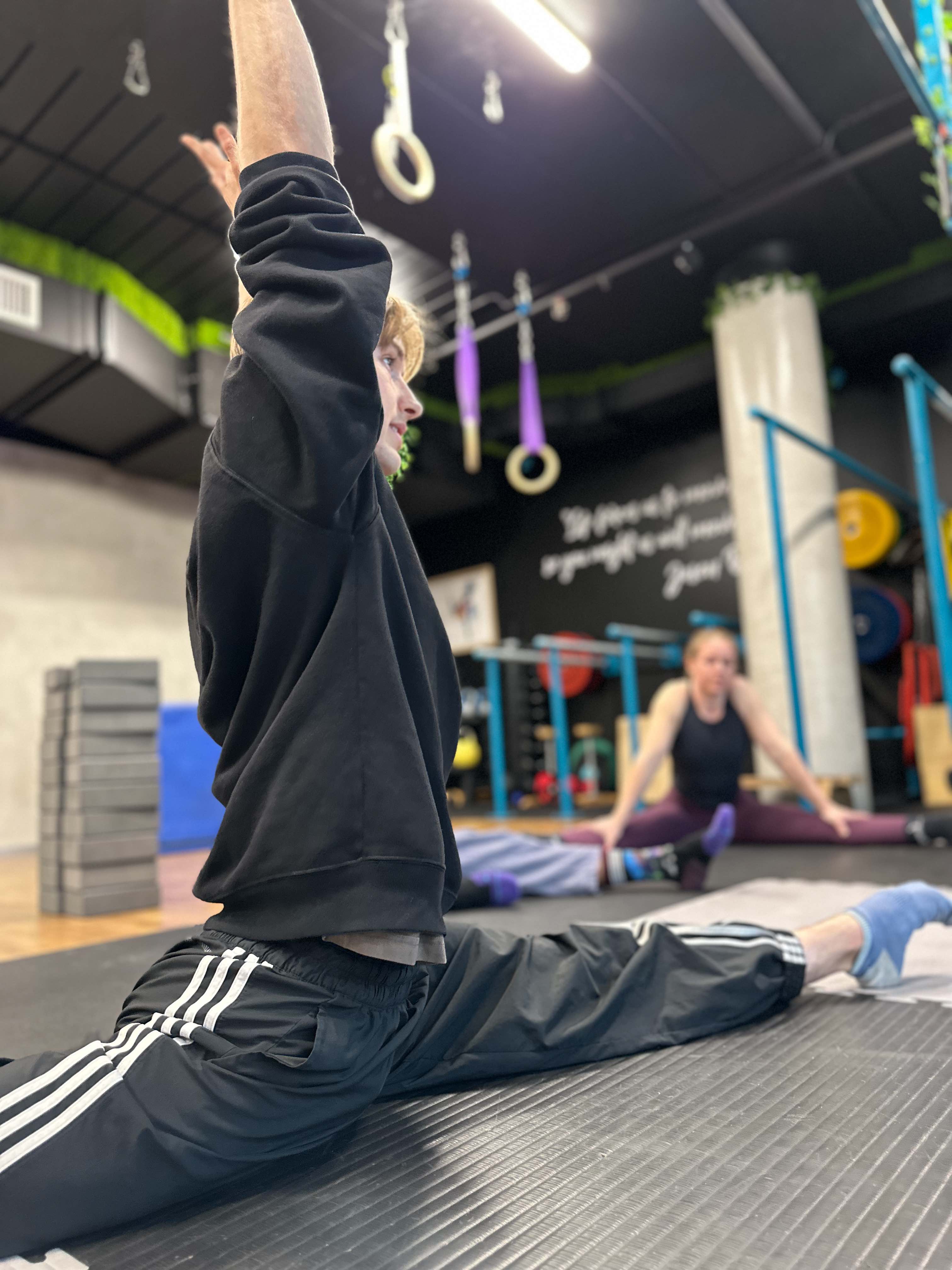
The middle splits represent one of flexibility training's most challenging achievements—lowering into a full straddle position with legs 180 degrees apart. This advanced flexibility pattern demands not only exceptional adductor length but also hip joint mobility that varies significantly based on individual anatomy. The middle splits serve as both an impressive achievement and a functional flexibility pattern enhancing athletic performance across numerous disciplines.
Beyond Movement approaches middle splits training with respect for individual anatomical variations and the understanding that not everyone's hip structure allows for full splits. Our methodology combines passive stretching, weighted mobility work, and active flexibility development to create sustainable progress while preventing injury. The journey to middle splits often reveals imbalances and restrictions that, when addressed, improve overall movement quality.
The benefits of middle splits training extend far beyond the achievement itself. The hip mobility developed enhances agility in lateral movements, improves kicking range for martial artists, and creates resilient adductors resistant to strain. Even those who never achieve full splits benefit from the improved hip function and movement quality developed through consistent practice.
How to do it
- 1 Sit tall against a wall with legs wide, back flat Range comes from the hips, not a rounded lower back
- 2 Work an active straddle: lift each leg a few centimetres off the floor and hold Builds strength in the range you already own
- 3 Add a supported side lunge, shifting weight slowly between legs Keep both feet flat and toes forward
- 4 Progress to a wall straddle, lying on your back with legs sliding wide Gravity does the work - stay relaxed and breathe
- 5 Finish with 60 to 90 seconds of the widest position you can hold with a flat back Stop at tension, never at pain
What it trains
The middle split trains hip abduction and external rotation, mostly through the adductors - the muscles running down your inner thigh - along with the hamstrings where they attach at the pelvis.
For most adults the limit is not muscle length but hip structure and nervous system protection. The depth of your hip socket and the angle of your femur set a hard ceiling that stretching cannot change, and your body will restrict range it does not feel strong in. This is why passive stretching alone tends to stall.
Training both ends works better: build strength in the range you already have through active straddle holds, then gently extend the edge. That combination signals safety and produces range you can actually use, rather than a position you can only fall into.
Prerequisites
- Good general hip flexibility
- No hip impingement issues
- Understanding of individual anatomy
- Patience with slow progress
- Consistent warm-up practice
Common mistakes
-
Forcing beyond anatomy
Respect your individual hip structure
-
Neglecting strength work
Build control and strength through range
-
Impatient progression
Accept the long timeline required
-
Poor alignment
Maintain proper hip and knee position
-
Training through pain
Distinguish healthy stretch from injury
Learn This Skill In These Classes
Related Skills
Foundation
Horse Stance
Build exceptional leg endurance and mental toughness with this traditional stance. Foundational for martial arts and leg strength.
Foundation
Lateral Lunges
Develop lateral movement strength and mobility. Essential for sports performance and balanced leg development.
Foundation
Hip Mobility
Coming Soon
Foundation
Pancake Stretch
Achieve remarkable hip flexibility with this wide-legged forward fold. Essential for press handstands and advanced movement patterns.
Progression
Oversplits
Coming Soon
Progression
Middle Split Holds
Coming Soon
Progression
Switch Splits
Coming Soon
Common questions about Middle Splits
How long does it take to learn Middle Splits?
Most people need 12-36 months of consistent, coached practice. That assumes you can already meet the prerequisites below — starting without them is the single biggest reason progress stalls.
What do you need before starting Middle Splits?
Build these first: Good general hip flexibility,No hip impingement issues,Understanding of individual anatomy,Patience with slow progress,Consistent warm-up practice. Each one removes a specific limitation, so working on them is not a detour — it is the fastest route to the skill.
What muscles are worked in Middle Splits?
The middle split trains hip abduction and external rotation, mostly through the adductors - the muscles running down your inner thigh - along with the hamstrings where they attach at the pelvis.
For most adults the limit is not muscle length but hip structure and nervous system protection. The depth of your hip socket and the angle of your femur set a hard ceiling that stretching cannot change, and your body will restrict range it does not feel strong in. This is why passive stretching alone tends to stall.
Training both ends works better: build strength in the range you already have through active straddle holds, then gently extend the edge. That combination signals safety and produces range you can actually use, rather than a position you can only fall into.
What are the most common Middle Splits mistakes?
- Forcing beyond anatomy — Respect your individual hip structure
- Neglecting strength work — Build control and strength through range
- Impatient progression — Accept the long timeline required
- Poor alignment — Maintain proper hip and knee position
- Training through pain — Distinguish healthy stretch from injury