
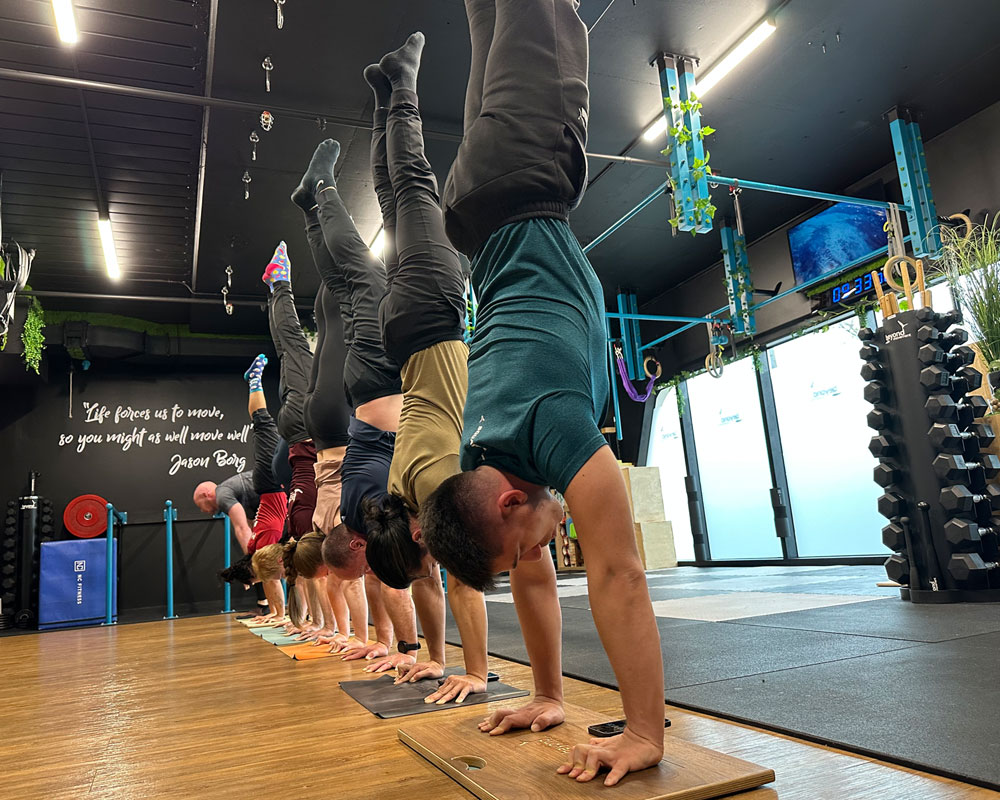
Pike Compression
Develop active flexibility by lifting your legs toward your torso. This skill bridges the gap between flexibility and strength.
Pike compression represents the critical link between passive flexibility and active movement control—the ability to actively pull the legs toward the torso while maintaining a pike position. This skill develops the hip flexor strength and active flexibility essential for movements like press handstands, V-sits, and advanced core work. Unlike passive stretching, compression work builds strength through the full range of motion.
At Beyond Movement, we emphasize pike compression as a fundamental pattern that unlocks advanced skills. The progression from passive pike stretches to active leg lifts creates measurable improvements in movement quality. The skill requires patience, as the hip flexors and core must develop specific strength while maintaining flexibility. This integration of strength and flexibility exemplifies the holistic approach necessary for advanced bodyweight training.
Pike compression work offers immediate benefits for daily movement patterns while building toward advanced skills. The hip flexor strength developed improves running efficiency, enhances kicking power for martial artists, and creates the active flexibility that distinguishes true movement mastery from mere passive range of motion.
Prerequisites
- Good passive pike flexibility (palms to floor)
- Basic core strength
- Understanding of hip flexor engagement
- Patience with incremental progress
- No hip flexor injuries
Common mistakes
-
Using momentum
Build strength through controlled movement
-
Neglecting eccentric control
Lower slowly to build strength
-
Poor spinal position
Maintain neutral spine throughout
-
Ignoring cramping
Build tolerance gradually
-
Insufficient frequency
Practice daily for best results
Related Skills
Common questions about Pike Compression
How long does it take to learn Pike Compression?
Most people need 4-8 months of consistent, coached practice. That assumes you can already meet the prerequisites below — starting without them is the single biggest reason progress stalls.
What do you need before starting Pike Compression?
Build these first: Good passive pike flexibility (palms to floor),Basic core strength,Understanding of hip flexor engagement,Patience with incremental progress,No hip flexor injuries. Each one removes a specific limitation, so working on them is not a detour — it is the fastest route to the skill.
What are the most common Pike Compression mistakes?
- Using momentum — Build strength through controlled movement
- Neglecting eccentric control — Lower slowly to build strength
- Poor spinal position — Maintain neutral spine throughout
- Ignoring cramping — Build tolerance gradually
- Insufficient frequency — Practice daily for best results