
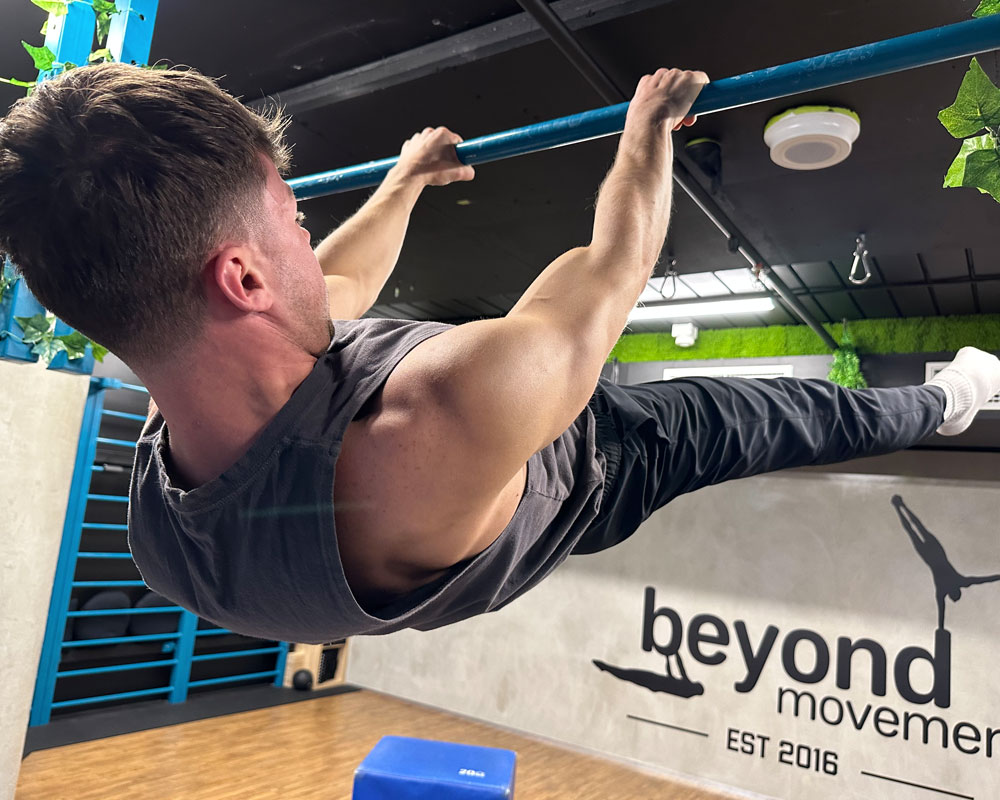
Dead Hang
Build grip strength and shoulder health with this fundamental hanging exercise. The foundation for all pulling movements.
The dead hang represents the most fundamental position in pulling training—simply hanging from a bar with straight arms. This seemingly simple exercise develops grip strength, decompresses the spine, and teaches proper shoulder positioning for all hanging movements. Beyond its role as a beginner exercise, the dead hang serves as a diagnostic tool and preparation movement throughout all levels.
At Beyond Movement, we use dead hangs to assess readiness for pulling work and build the foundation for advanced movements. The progression from short holds to extended durations develops not just grip strength but also the shoulder stability and positioning crucial for injury prevention. We emphasize active shoulders rather than passive hanging to build strength while protecting joints.
Dead hang practice offers benefits extending beyond pull-up preparation. The spinal decompression provides relief from compression-based activities and sitting, while the grip strength developed enhances all pulling movements. Office workers particularly appreciate the shoulder mobility and postural benefits of regular hanging practice.
Prerequisites
- None (scalable to all levels)
- Basic grip ability
- Healthy shoulders
- Understanding of shoulder position
Common mistakes
-
Passive shoulders
Engage lats slightly
-
Death grip
Use only necessary tension
-
Holding breath
Breathe normally
-
Swinging
Maintain stillness
-
Forcing duration
Build gradually
Related Skills
Foundation
Grip Strength
Build powerful grip strength for hanging, pulling, and daily activities. The often-limiting factor in upper body training.
Foundation
Scapular Awareness
Develop conscious control of your shoulder blades. Essential for safe and effective upper body training.
Progression
Pull-Ups
The king of upper body exercises. Build the pulling strength essential for muscle-ups, levers, and climbing movements.
Progression
Muscle-Up
The ultimate pulling exercise that combines an explosive pull-up with a dip transition. Master this dynamic movement to showcase true upper body power.
Progression
Scapular Pull-Ups
Coming Soon
Progression
One-Arm Dead Hang
Coming Soon
Common questions about Dead Hang
How long does it take to learn Dead Hang?
Most people need 2-4 weeks of consistent, coached practice. That assumes you can already meet the prerequisites below — starting without them is the single biggest reason progress stalls.
What do you need before starting Dead Hang?
Build these first: None (scalable to all levels),Basic grip ability,Healthy shoulders,Understanding of shoulder position. Each one removes a specific limitation, so working on them is not a detour — it is the fastest route to the skill.
What are the most common Dead Hang mistakes?
- Passive shoulders — Engage lats slightly
- Death grip — Use only necessary tension
- Holding breath — Breathe normally
- Swinging — Maintain stillness
- Forcing duration — Build gradually