
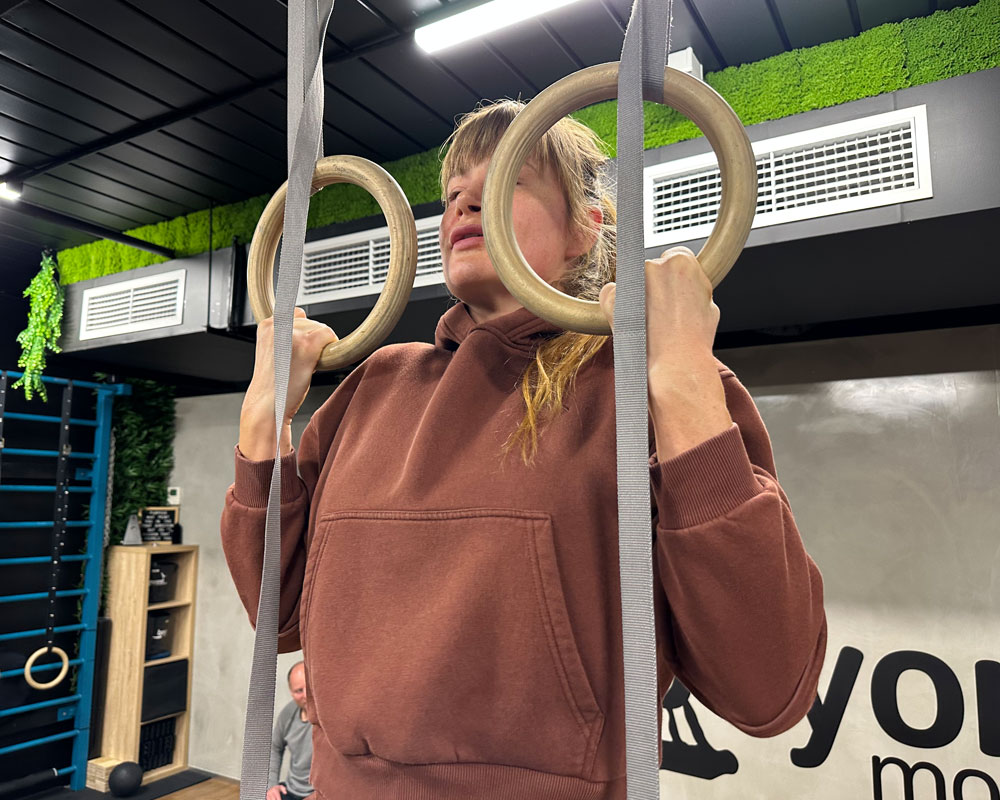
Muscle-Up
The ultimate pulling exercise that combines an explosive pull-up with a dip transition. Master this dynamic movement to showcase true upper body power.
The muscle-up represents a pinnacle achievement in calisthenics, a dynamic movement that explosively pulls you from below the rings or bar to a support position above. This compound exercise demands not just strength but precise technique, explosive power, and the confidence to commit to the transition.
Beyond Movement's approach to muscle-up training focuses on building the specific strength patterns and technical precision required, rather than relying on general fitness alone. We've witnessed incredible transformations in our programming, with many students who have progressed from struggling to hang for a minute to performing multiple muscle-ups with control.
The muscle-up serves as more than just an impressive feat, it's a comprehensive test of pulling power, pushing strength, and the ability to generate momentum through coordinated full-body movement. For athletes, the explosive hip drive and pulling mechanics transfer directly to sport-specific movements, while the achievement itself builds tremendous confidence.
What it trains
A full-chain pull and press in one movement: lats, biceps and mid-back drive the pull, then chest, front deltoids and triceps take over for the press out. The core and hip flexors coordinate the transition.
What makes it hard is not any single strength quality but the handover between two of them. Most people fail in the transition, the brief moment where the pull has finished and the press has not yet begun, and that is a coordination and position problem rather than a strength one. It is why people with more than enough pull-up strength can still miss it for months.
Prerequisites
- 12+ strict chest-to-bar pull-ups
- 15+ deep ring or bar dips
- 60-second false grip hang (for ring muscle-ups)
- Understanding of technical mechanics and explosive pulling
- Core strength for body positioning during transition
- Shoulder mobility, strength and stability
Common mistakes
-
Chicken wing transition
Develop symmetrical pulling patterns and shoulder mobility
-
Insufficient pull height
Focus on explosive pulls to lower chest/sternum
-
Poor technical timing
Practice hip drive coordination separately
-
Neglecting the dip portion
Ensure shoulder extension strength before attempting
-
Using too much momentum
Build strict strength before adding momentum
Related Skills
Foundation
Ring Rows
Build powerful pulling strength with this fundamental ring exercise. Ring rows develop the back, biceps, and grip while teaching proper shoulder mechanics for advanced pulling movements.
Foundation
Pull-Ups
The king of upper body exercises. Build the pulling strength essential for muscle-ups, levers, and climbing movements.
Foundation
Dips
Build powerful triceps and chest with this fundamental exercise. Essential for muscle-up development and upper body strength.
Foundation
Explosive Pull-Ups
Build power with controlled explosive pulling. This dynamic variation develops the speed-strength needed for advanced skills.
Foundation
False Grip
Coming Soon
Variation
Weighted Pull-Ups
Add external load to build exceptional pulling strength. This progression method accelerates development toward advanced skills.
Variation
Explosive Pull-Ups
Build power with controlled explosive pulling. This dynamic variation develops the speed-strength needed for advanced skills.
Progression
Strict Muscle-Up
Coming Soon
Progression
L-Sit Muscle-Up
Coming Soon
Progression
Wide Grip Muscle-Up
Coming Soon
Progression
Weighted Muscle-Up
Coming Soon
Common questions about Muscle-Up
How long does it take to learn Muscle-Up?
Most people need 3-6 months (with prerequisites) of consistent, coached practice. That assumes you can already meet the prerequisites below — starting without them is the single biggest reason progress stalls.
What do you need before starting Muscle-Up?
Build these first: 12+ strict chest-to-bar pull-ups,15+ deep ring or bar dips,60-second false grip hang (for ring muscle-ups),Understanding of technical mechanics and explosive pulling,Core strength for body positioning during transition,Shoulder mobility, strength and stability. Each one removes a specific limitation, so working on them is not a detour — it is the fastest route to the skill.
What muscles are worked in Muscle-Up?
A full-chain pull and press in one movement: lats, biceps and mid-back drive the pull, then chest, front deltoids and triceps take over for the press out. The core and hip flexors coordinate the transition.
What makes it hard is not any single strength quality but the handover between two of them. Most people fail in the transition, the brief moment where the pull has finished and the press has not yet begun, and that is a coordination and position problem rather than a strength one. It is why people with more than enough pull-up strength can still miss it for months.
What are the most common Muscle-Up mistakes?
- Chicken wing transition — Develop symmetrical pulling patterns and shoulder mobility
- Insufficient pull height — Focus on explosive pulls to lower chest/sternum
- Poor technical timing — Practice hip drive coordination separately
- Neglecting the dip portion — Ensure shoulder extension strength before attempting
- Using too much momentum — Build strict strength before adding momentum
What is a muscle-up?
A movement that takes you from hanging below a bar or rings to supporting yourself above them in one continuous effort. It combines a powerful pull-up with a dip, joined by a transition where the body rotates around the hands. It is the standard gateway between basic pulling strength and advanced ring work.
What are the prerequisites for a muscle-up?
Roughly 10 to 12 strict pull-ups, 10 to 15 clean dips, and comfort in a support hold at the top. On rings, add a false grip you can hold for 30 seconds. Most people who meet those numbers and still cannot muscle up are missing the transition, not the strength.
Is a ring muscle-up harder than a bar muscle-up?
Harder in stability, easier on the joints. The rings move, so you pay a coordination cost that a fixed bar does not charge, and the false grip is close to mandatory. But the rings rotate with you through the transition rather than forcing your wrists around a fixed bar, which is why they tend to be kinder over years of training.
Why can I do pull-ups but not a muscle-up?
Almost always the transition. A pull-up finishes with the chin over the bar; a muscle-up needs the chest to arrive there with the elbows driving back and the torso leaning forward. Training that specific position with band-assisted transitions or high pulls to the sternum fixes it faster than adding more pull-ups.