
Hamstring Flexibility
Develop flexible and strong hamstrings for better movement. Essential for forward folds, kicks, and injury prevention.
Hamstring flexibility represents a fundamental component of movement quality, affecting everything from forward bending to athletic performance. These large muscles running down the back of the thigh often become restricted through sitting and lack of varied movement. Comprehensive hamstring development combines passive stretching with active flexibility and eccentric strengthening to create resilient, functional range of motion.
At Beyond Movement, we approach hamstring flexibility as more than just passive stretching. Our protocols include dynamic warm-ups, PNF stretching, loaded flexibility work, and movement integration to create lasting changes. This multifaceted approach addresses not just muscle length but also nervous system restrictions and strength through range of motion.
Improved hamstring flexibility enhances performance while reducing injury risk across all activities. Athletes gain improved running mechanics and jumping ability, yogis achieve deeper forward folds, and martial artists develop higher kicks. Perhaps most importantly, flexible hamstrings contribute to better posture and reduced lower back stress, benefiting everyone regardless of athletic pursuits.
Prerequisites
- None (accessible to all)
- Basic understanding of stretching
- Patience with progress
- No acute hamstring injuries
Common mistakes
-
Forcing stretches
Progress gradually
-
Rounding back
Maintain spine integrity
-
Ignoring strength
Include eccentric work
-
Inconsistent practice
Daily work optimal
-
All passive work
Include active flexibility
Learn This Skill In These Classes
Related Skills
Foundation
Forward Fold
Master this fundamental flexibility position. Benefits your entire posterior chain while calming the nervous system.
Foundation
Toe Touches
Coming Soon
Foundation
Seated Stretches
Coming Soon
Progression
Pike Compression
Develop active flexibility by lifting your legs toward your torso. This skill bridges the gap between flexibility and strength.
Progression
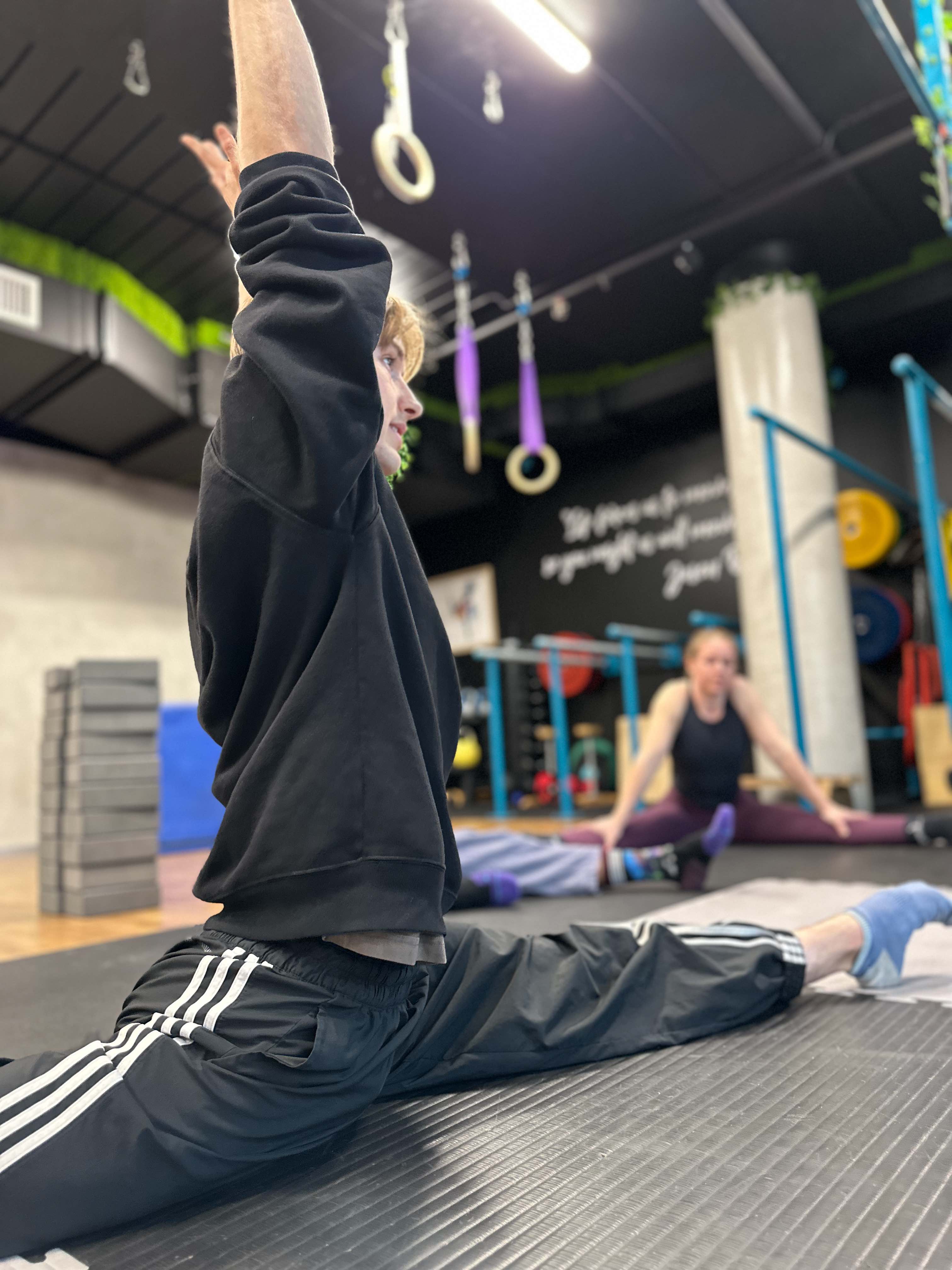
Front Splits
Master the classic splits position for enhanced hip flexibility and leg mobility. More achievable than middle splits for most practitioners.
Progression
Standing Splits
Coming Soon
Progression
Jefferson Curls
Build spinal flexibility and strength through controlled segmental movement. Revolutionary for back health when properly performed.
Common questions about Hamstring Flexibility
How long does it take to learn Hamstring Flexibility?
Most people need 3-6 months of consistent, coached practice. That assumes you can already meet the prerequisites below — starting without them is the single biggest reason progress stalls.
What do you need before starting Hamstring Flexibility?
Build these first: None (accessible to all),Basic understanding of stretching,Patience with progress,No acute hamstring injuries. Each one removes a specific limitation, so working on them is not a detour — it is the fastest route to the skill.
What are the most common Hamstring Flexibility mistakes?
- Forcing stretches — Progress gradually
- Rounding back — Maintain spine integrity
- Ignoring strength — Include eccentric work
- Inconsistent practice — Daily work optimal
- All passive work — Include active flexibility