
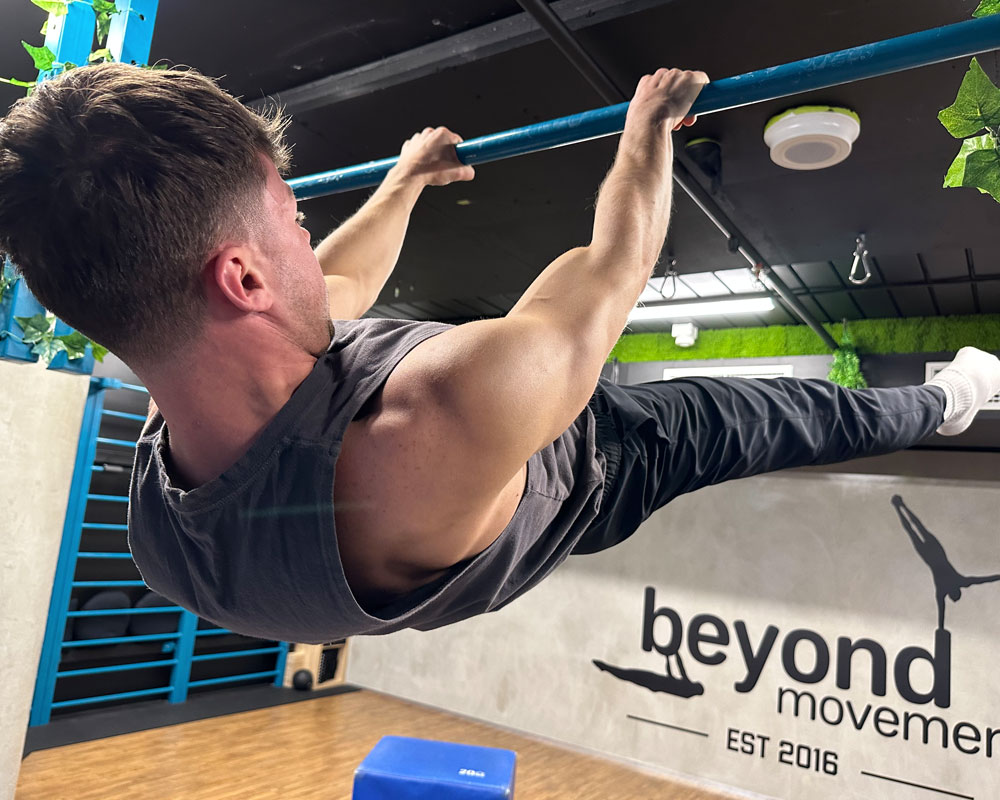
L-sit pull-ups combine the pulling pattern with sustained core compression, creating a compound movement that challenges multiple systems simultaneously. Maintaining the L-sit position throughout the pull-up demands exceptional core strength, hip flexor endurance, and the coordination to perform complex movements while holding tension. This variation serves as both a strength builder and a test of integrated body control.
Beyond Movement uses L-sit pull-ups to develop the specific strength patterns required for advanced gymnastics movements. The exercise teaches maintenance of position under changing forces, a skill crucial for dynamic movements and transitions. The combination of pulling and compression creates time-efficient training while building attributes that transfer to numerous skills.
The integrated strength developed through L-sit pull-ups enhances performance across multiple domains. The core compression maintained during pulling transfers directly to front lever training, while the overall body control improves all gymnastics movements. Athletes appreciate the functional strength pattern that mirrors real-world demands for simultaneous actions.
Prerequisites
- 10+ strict pull-ups
- 20+ second L-sit hold
- Good hip flexor flexibility
- Understanding of compression
- Core endurance
Common mistakes
-
Dropping legs during pull
Maintain L position
-
Using momentum
Keep movement controlled
-
Partial range of motion
Full extension to chin over bar
-
Holding breath
Maintain steady breathing
-
Bent knees
Work toward straight legs
Related Skills
Foundation
L-Sit
Build exceptional core strength with this fundamental hold. The L-sit develops compression strength essential for advanced gymnastics movements.
Progression
V-Sit Pull Ups
Coming Soon
Progression
L-Sit Muscle Up
Coming Soon
Common questions about L-Sit Pull-Ups
How long does it take to learn L-Sit Pull-Ups?
Most people need 2-3 months (with prerequisites) of consistent, coached practice. That assumes you can already meet the prerequisites below — starting without them is the single biggest reason progress stalls.
What do you need before starting L-Sit Pull-Ups?
Build these first: 10+ strict pull-ups,20+ second L-sit hold,Good hip flexor flexibility,Understanding of compression,Core endurance. Each one removes a specific limitation, so working on them is not a detour — it is the fastest route to the skill.
What are the most common L-Sit Pull-Ups mistakes?
- Dropping legs during pull — Maintain L position
- Using momentum — Keep movement controlled
- Partial range of motion — Full extension to chin over bar
- Holding breath — Maintain steady breathing
- Bent knees — Work toward straight legs