
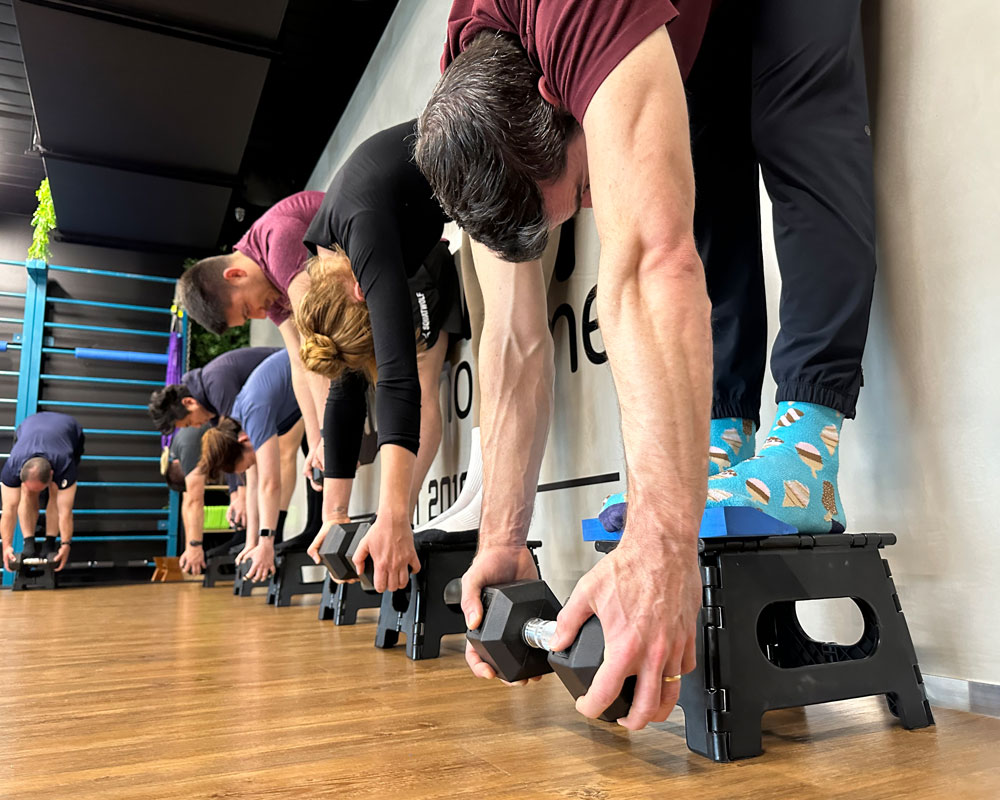
Low Lunge
Open your hip flexors with this fundamental stretch. Essential for runners and anyone who sits frequently.
The low lunge serves as a fundamental hip flexor stretch, addressing one of the most commonly restricted areas in modern bodies. This position, with one knee down and the other foot forward, creates an accessible stretch for the back leg’s hip flexor while providing options for increasing intensity. The versatility of low lunge makes it valuable from beginner rehabilitation to advanced flexibility training.
Beyond Movement uses low lunge as both an assessment tool and training exercise, revealing hip flexor restrictions while providing the means to address them. The position allows for numerous variations—adding reaches, rotations, or deeper sinking—to target different aspects of hip mobility. We emphasize proper positioning to ensure the stretch targets intended areas without straining the lower back.
Regular low lunge practice yields benefits extending far beyond flexibility gains. Runners experience improved stride length and reduced injury risk, while office workers find relief from the hip tightness causing lower back pain. The position also serves as preparation for more advanced movements like splits and deep lunges, making it foundational for movement development.
Prerequisites
- None (accessible to all)
- Basic balance
- Knee padding helpful
- Understanding of hip anatomy
Common mistakes
-
Overarching back
Keep spine neutral
-
Knee past toes
Maintain vertical shin
-
Forcing depth
Progress gradually
-
Holding breath
Breathe into stretch
-
Static only
Add gentle movement
Learn This Skill In These Classes
Related Skills
Foundation
Hip Flexor Stretches
Coming Soon
Foundation
Kneeling Lunge
Coming Soon
Foundation
Single-Leg Balance
Develop proprioception and stability through balance training. Essential for injury prevention and athletic performance.
Progression
Front Splits
Master the classic splits position for enhanced hip flexibility and leg mobility. More achievable than middle splits for most practitioners.
Progression
High Lunge
Coming Soon
Progression
Lunge Variations
Coming Soon
Common questions about Low Lunge
How long does it take to learn Low Lunge?
Most people need 2-4 weeks of consistent, coached practice. That assumes you can already meet the prerequisites below — starting without them is the single biggest reason progress stalls.
What do you need before starting Low Lunge?
Build these first: None (accessible to all),Basic balance,Knee padding helpful,Understanding of hip anatomy. Each one removes a specific limitation, so working on them is not a detour — it is the fastest route to the skill.
What are the most common Low Lunge mistakes?
- Overarching back — Keep spine neutral
- Knee past toes — Maintain vertical shin
- Forcing depth — Progress gradually
- Holding breath — Breathe into stretch
- Static only — Add gentle movement