
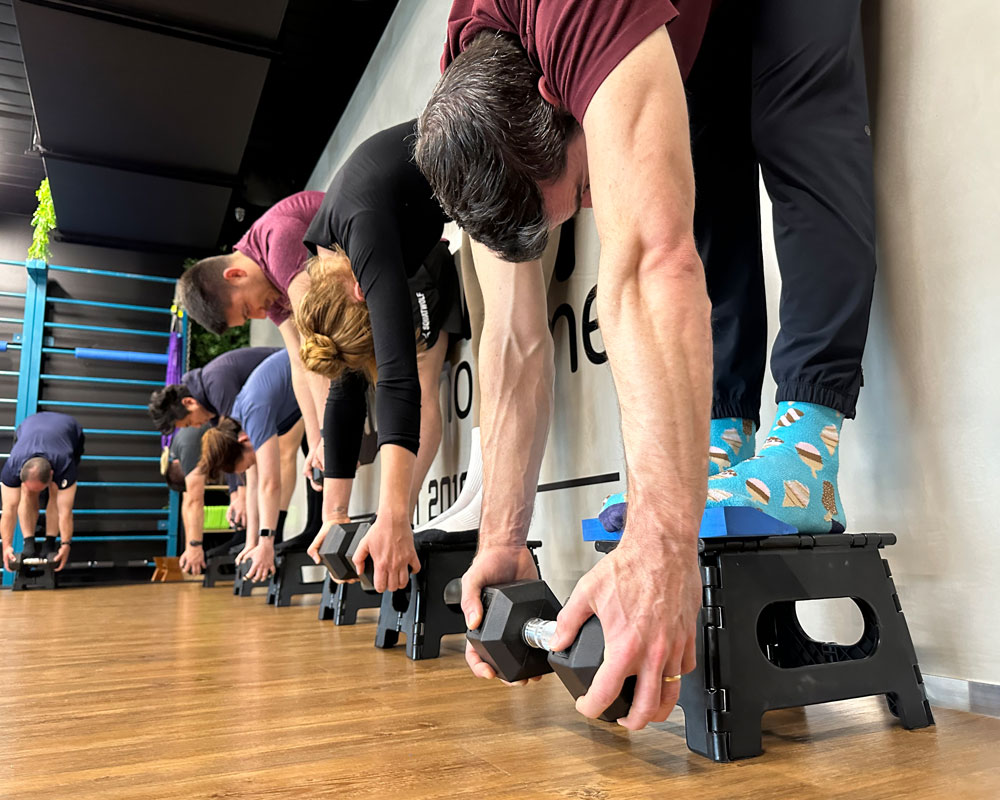
Single-Leg Balance
Develop proprioception and stability through balance training. Essential for injury prevention and athletic performance.
Single-leg balance forms the foundation of unilateral stability, challenging proprioceptive systems while strengthening the small stabilizing muscles around ankles, knees, and hips. This fundamental skill underlies safe movement in daily life and athletic performance, yet remains underdeveloped in many adults. Progressive balance training creates resilient, responsive stabilization systems.
At Beyond Movement, we approach balance training as essential preparation for all movement practices. Starting with eyes-open stands and progressing through closed eyes, unstable surfaces, and dynamic movements, students develop comprehensive balance abilities. We emphasize quality over duration, as compensatory patterns defeat the purpose of building proper stabilization.
Enhanced single-leg balance transforms movement quality and reduces injury risk dramatically. Athletes experience improved agility and change of direction, while older adults significantly reduce fall risk. The proprioceptive improvements enhance all activities requiring coordination, while the stabilizer strengthening protects joints during dynamic movements. Regular balance practice is an investment in long-term movement health.
Prerequisites
- None (scalable to all)
- Basic standing ability
- Safe environment for practice
- Patience with wobbling
Common mistakes
-
Gripping with toes
Stay relaxed
-
Fixed focus
Use soft gaze
-
Holding breath
Breathe normally
-
Rigid body
Allow micro-movements
-
Progressing too quickly
Master basics first
Learn This Skill In These Classes
Related Skills
Foundation
Standing Balance
Coming Soon
Foundation
Proprioception
Coming Soon
Foundation
Ankle Stability
Coming Soon
Progression
Pistol Squat
Master the single-leg squat for exceptional leg strength and balance. This challenging movement builds functional lower body power.
Progression
Single-Leg Deadlift
Coming Soon
Progression
Advanced Balance Challenges
Coming Soon
Common questions about Single-Leg Balance
How long does it take to learn Single-Leg Balance?
Most people need 2-4 weeks of consistent, coached practice. That assumes you can already meet the prerequisites below — starting without them is the single biggest reason progress stalls.
What do you need before starting Single-Leg Balance?
Build these first: None (scalable to all),Basic standing ability,Safe environment for practice,Patience with wobbling. Each one removes a specific limitation, so working on them is not a detour — it is the fastest route to the skill.
What are the most common Single-Leg Balance mistakes?
- Gripping with toes — Stay relaxed
- Fixed focus — Use soft gaze
- Holding breath — Breathe normally
- Rigid body — Allow micro-movements
- Progressing too quickly — Master basics first